Encore Trophy Studio · specification guide
Prepare dance awards for a touring or international recital
Count performers, routines and studio recognitions separately. Decide whether the award follows an individual dancer, a routine or the studio, then group the order by the presentation session. Keep the official category wording distinct from personal encouragement and teacher appreciation.
Reviewed 2026-09-05 · AI-assisted editorial review. General buying guidance; illustrative scenarios are not customer case studies. Images are AI-generated concepts.
Choose the construction before counting the shipment
A performer can appear in several routines but receive only one participation keepsake, or the studio may intentionally award a piece for each routine. Neither interpretation should be left implicit in the order. Confirm whether competitive placements, recital participation and personal recognition use separate designs. The longest routine title is a useful proof example because shortening it after the whole set is approved can leave the printed program and awards describing different work.


A worked quantity example
Illustrative order: 30 dancers perform six routines. Every dancer receives one recital keepsake, three routines receive one shared placement trophy each and two teachers receive appreciation plaques. The total is 35 pieces. Counting every dancer in every routine would produce an unrelated number. If a dancer intentionally receives an additional solo award, create another row tied to that category. Keep the receipt groups aligned with the show schedule when the same studio performs in two cities.
Compare relevant design starting points
The catalog offers different starting points for this brief. Compare the intended use and proposed specification below, then ask which construction and included components fit your own receiving and display plan. These are design proposals, not measured packed goods.
| Option | Intended use | Proposed material and size | Personalization |
|---|---|---|---|
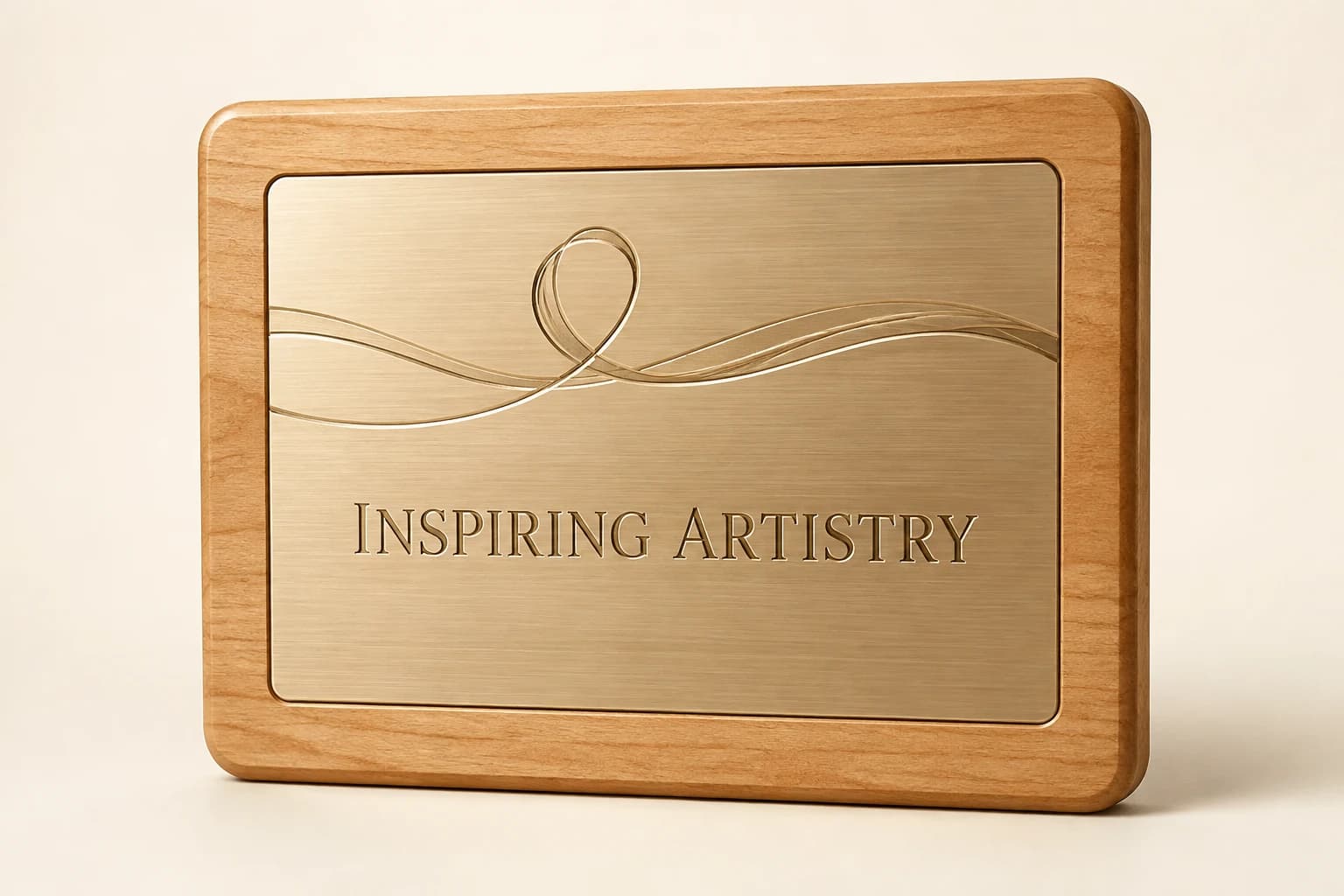
| Recital Award | Capture the feeling of movement in a keepsake built for the final bow. This award pairs a flowing silhouette with a clear place for the dancer, routine or studio name. | Brushed metal and frosted acrylic. 10 in tall | Dancer; Routine; Category; Recognition; Year |
| Star Acrylic Dance Award | Make a bright, compact keepsake for a dancer's achievement. The star-shaped acrylic award suits recital recognition, studio honors or a special performance moment. | Clear or colored acrylic. 7"–9" H | Dancer; Recognition; Event; Year |
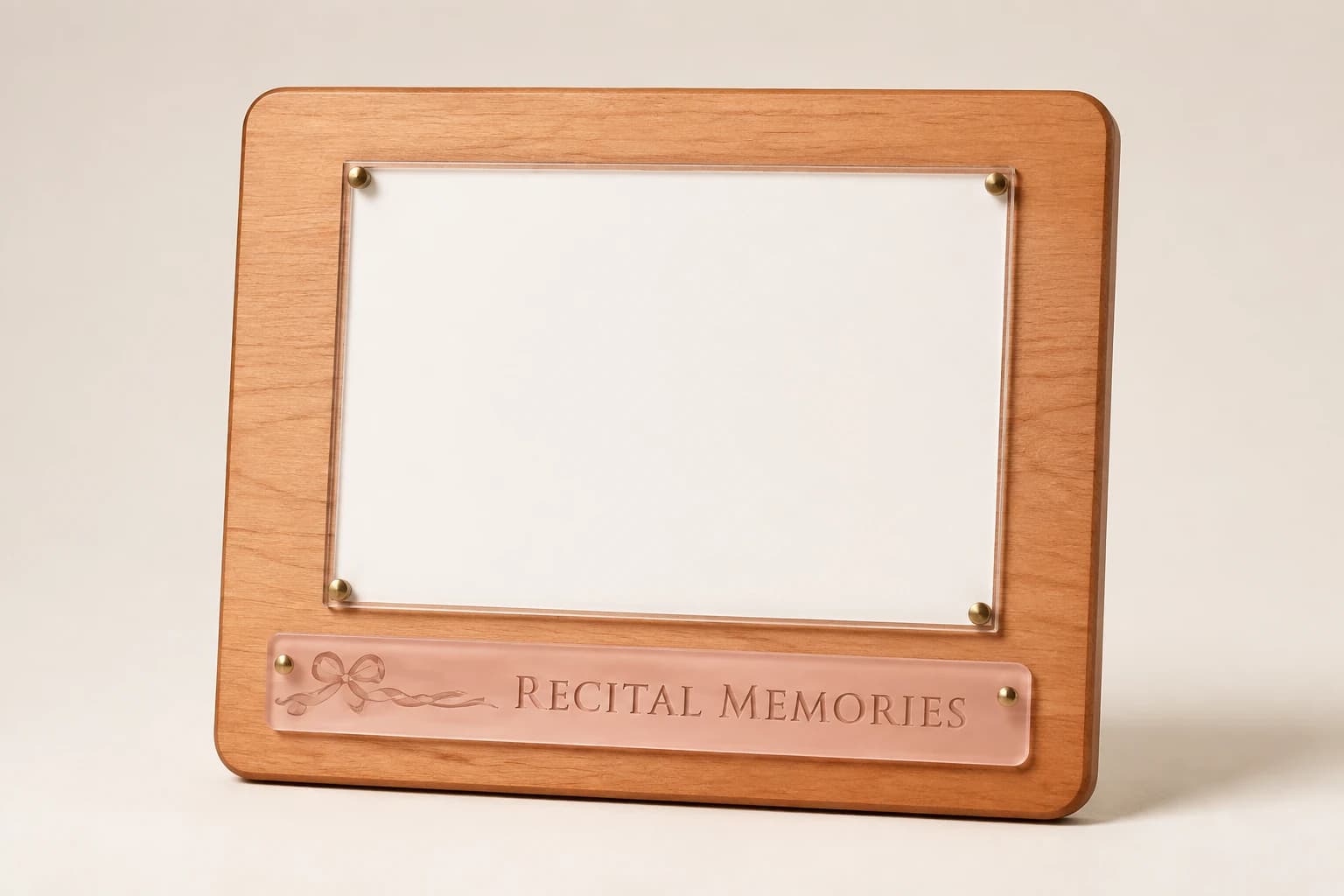
| Dance Team Photo Plaque | Keep the ensemble and its shared performance together in one display. A team photograph sits beside the routine or season that brought the dancers together. | Wood with acrylic cover. 11" x 9" | Team; Routine; Season; Caption |
| Perpetual Dance Studio Plaque | Build a studio tradition on a board that grows each season. Individual plates can record annual honorees, scholarship recipients or named studio awards. | Walnut with metal plates. 15" x 12" | Studio; Program; Recipient; Year |
When to consider Recital Award
Decide whether the award recognizes an individual performance or the whole routine. A shared ensemble trophy can lead with the routine title, while individual versions give every dancer's name the same prominence.
Example layout fields: Dancer: Alex Morgan; Routine: After the Rain; Category: Contemporary Solo; Recognition: Overall Winner; Year: 2026. The names and wording are illustrative. Open this design from the collection to replace them with your approved information.
When to consider Star Acrylic Dance Award
Choose one recognition theme for the main line, such as artistry, progress or stage presence. The dancer's name should remain easy to see within the star shape, with the recital title kept shorter beneath it.
Example layout fields: Dancer: Riley Chen; Recognition: Stage Presence; Event: The Autumn Recital; Year: 2026. The names and wording are illustrative. Open this design from the collection to replace them with your approved information.

When to consider Dance Team Photo Plaque
Choose whether the image shows costumes from one routine or the whole season's team. Use a caption that matches that photograph, and place any roster outside the image so faces remain unobstructed.
Example layout fields: Team: Northline Ensemble; Routine: After the Rain; Season: 2026; Caption: One stage, one team. The names and wording are illustrative. Open this design from the collection to replace them with your approved information.
When to consider Perpetual Dance Studio Plaque
Choose one program for the board and decide how many entries it needs each year. Leave room for future seasons, and keep the plate wording consistent so the history remains easy for new dancers to follow.
Example layout fields: Studio: Northline Dance; Program: Annual Artistry Award; Recipient: Jamie Lee; Year: 2026. The names and wording are illustrative. Open this design from the collection to replace them with your approved information.
Keep the piece count separate from the delivery plan
Use dancer or routine reference, personal or shared piece, show and studio group, approved routine title as the project-specific headings in the specification file. Add a stable row reference, the quantity of physical pieces and a receiving group. If two pieces share artwork but go to different destinations, keep separate delivery rows. If one person intentionally receives two different awards or signs, preserve both product rows. Repeated names alone are not an error.
The worksheet below totals the pieces you enter and reconciles them by receiving reference. It does not infer how many packages will be needed. One large assembly can require more than one package, and several small pieces may share a package when the final packing plan permits it. Ask for the packed dimensions, weights and component list after the construction is settled. Keep the receiving group names consistent; two slightly different labels are treated as two groups.
Use one controlling unit on the drawing
One inch equals exactly 25.4 millimeters. The worksheet converts entered width and height using that relationship and keeps the original values visible. A converted display is a convenience for review; it does not create a fabrication tolerance or certify physical fit.
Specify whether a measurement describes the overall assembly, the visible face, the engraving area or an opening in an existing holder. Include thickness, depth, hole spacing and support clearances separately when they matter. Do not round a metric opening into a convenient inch size and assume the fit is unchanged. Identify which drawing and measurement control when two references disagree, and have the responsible project contact resolve that disagreement before the proof is released.
Sources: NIST: SI units: length
Proof names and language without changing their meaning
Personal naming conventions vary across cultures. Keep the exact display text supplied by the person approving it, including accents, punctuation and name order. A shipping contact may use a different form of the name from the inscription; the artwork should not be overwritten by an address record.
For several languages, provide each approved version rather than asking the production file to translate itself. Review the longest lines, the intended reading order and any script-specific layout in the actual proof. A typed sample is useful for wording approval, but it does not establish which font or marking method will reproduce it clearly. Use an unambiguous written date or identify the intended numeric date convention. Keep the accepted text and proof revision together so later edits can be traced.
Sources: W3C: Personal names around the world
Reconcile the quantities and prepare a private brief
Enter groups of matching pieces below. Add a receiving reference and optional width and height, then review the total and the unresolved quote details. The examples above are illustrative; replace them with your own order information. No automatic spares, discounts, freight costs or delivery promises are added.
Method: Sum positive whole-piece quantities, group by the exact receiving reference and convert optional dimensions using 25.4 millimeters per inch. No spare pieces are inferred. Display conversions use at most four decimal places and do not establish manufacturing tolerances. Customs, freight, origin and arrival timing remain quote questions.
Build your international order brief
Add groups of pieces sharing a specification and receiving destination. Use an office, venue or country reference here; street addresses are not needed for this planning step. Quantities are pieces, and delivery groups are not parcel counts.
Compare the complete written order, in a stated currency
Ask each option to identify the product quantity and what is included: personalization, new artwork, tooling, presentation packaging, mounting parts or assembly work. Keep one-time charges separate from recurring piece charges so a future reorder can be discussed accurately. A starting price for a small component is not the price of a complete display. Compare the alternatives against the same approved brief before deciding that one total represents a saving.
Record the currency code next to each quoted amount. Do not combine a product estimate in one currency with a freight amount in another without an explicit conversion source and date. Ask the quote to state the freight service, any quoted import charges and the party responsible for charges that are not included. The worksheet records your requested arrangement, which still needs written confirmation. It calculates no selling price, exchange rate, tax rate or customs charge.
Confirm shipment details for the actual destination
Commercial invoices identify goods, quantities and values. Ask the shipping contact to confirm the accurate product descriptions, origin information and other documentation required for the particular shipment. This guide and its worksheet are planning aids, not customs declarations.
Give the quoting team the receiving country and the actual destination details through the order process. Confirm the ship-from location, the available service and who will answer delivery or import questions. Do not infer the origin of the goods from the storefront name or assume that an event gift has no reportable value. Keep production completion, carrier transit and the requested in-hand date as separate milestones in the written plan. The receiving date you enter below is a request, not a calculated arrival commitment.
Prepare the handoff and the receiving check
Use show, studio and award category as packing references. Keep shared routine trophies distinct from personal dancer pieces. For international events, identify whether the studio receives everything before travel or whether the event coordinator receives the finished set. Record any language variants and approved stage names without automatically replacing them with legal names.
Before distribution, match the delivered piece references and component counts to the approved schedule. Check the wording against the accepted proof and keep the packaging while any discrepancy is being reviewed. Identify the affected row, proof revision and photographs when requesting help. Preserve the order record for replacements or a repeat event; a later order still needs its own confirmed specification, price and schedule.
Collection planning overview
This existing narrated collection overview provides background for the design choice. Use the international worksheet and the receiving schedule in this guide for the delivery brief. The visuals are original design concepts rather than footage of completed shipments.
25-second overview
Organize dance recital and competition awards
Start with the actual recital or competition categories. Decide whether each routine receives a shared award or individual pieces for the dancers. Keep routine titles and names in separate fields. Match the design to the performance style, review the longest inscriptions and organize packing around the presentation schedule before approving the order.
Prepare your brief and request a written quote.
Questions before the order is released
Does one delivery group mean one parcel?
No. A delivery group connects pieces to a receiver or location. The final construction, packed dimensions and protection determine the package plan. Ask for the actual parcel or freight details in the quote.
Does entering a country confirm delivery service?
No. The worksheet records the destination you want quoted. The order team confirms service for the actual address, shipping arrangements and timing in the written quote.
Will the worksheet add spare pieces or discounts?
No. It adds only the quantities you enter. Create an explicit spare-pieces row if you want extras, and keep personalized pieces separate from blanks. Any discount belongs in the written quote.
Which project details should accompany this brief?
Include dancer or routine reference; personal or shared piece; show and studio group; approved routine title. Keep the exact approved text and the physical specification linked to a stable row reference, then identify the receiving group for each piece.
Turn the schedule into a specific quote request
Choose a design, reconcile the physical pieces and include the decisions that remain open. The quote team can then review the construction, artwork, packing and delivery requirements as one defined project. Save the worksheet result with your approved source files so a later change can be applied to the correct group.
Sources and scope
The sources below support the cited technical details. The ordering workflows are editorial recommendations. Your project specification, price and schedule are established in the written quote and approved proof.
- NIST: SI units: length · checked 2026-09-05
- W3C: Personal names around the world · checked 2026-09-05
- UPS: How to create a commercial invoice · checked 2026-09-05
Which buying guide should you read next?
All buying guidesCurrent results are Pinterest boards, TikTok clips and short store blog lists. This page groups dance award ideas by technique, performance, growth, leadership, spirit and genre, gives each a kind engraving line with exact character counts and a matching Encore Trophy Studio format, and covers age-appropriate tone and why song lyrics stay off the award.
Write studio and teacher award inscriptions around an approved recipient, occasion and specific contribution, keeping appreciation separate from competition results and unsupported superlatives.
Build the recital count from unique approved recipients or approved performance entitlements, then keep show appearances and later handoffs in separate fields.
Keep the director-approved routine title intact where possible, then compare line breaks, hierarchy and inscription area before approving any shortened display form.