Encore Trophy Studio · buyer guide
Dance award wording for studios and teachers
For an Encore Trophy Studio worldwide teacher or studio award, name the approved recipient, presenting group and specific occasion before choosing decorative wording. A class thank-you, studio milestone and competitive achievement make different statements. Keep appreciation accurate and concise, then review the exact name, date and message in the proposed finished layout.
Reviewed 2026-09-05 · AI-assisted editorial review. General buying guidance; illustrative scenarios are not customer case studies. Images are AI-generated concepts.
Who receives the award and who presents it?
Decide whether the piece is addressed to a teacher, a studio owner, an ensemble or an individual dancer. Then identify who presents the recognition: a class, the studio, a graduating cohort or another authorized group. These choices shape the voice of the inscription and prevent a class gift from sounding like an official studio-wide award.
Use the exact approved display name and title. A teacher may prefer a familiar classroom name while a formal program uses a professional name. Ask the authorized contact to confirm the intended form rather than combining several versions found in schedules or social profiles. Keep billing identity and public recognition identity separate when they differ.

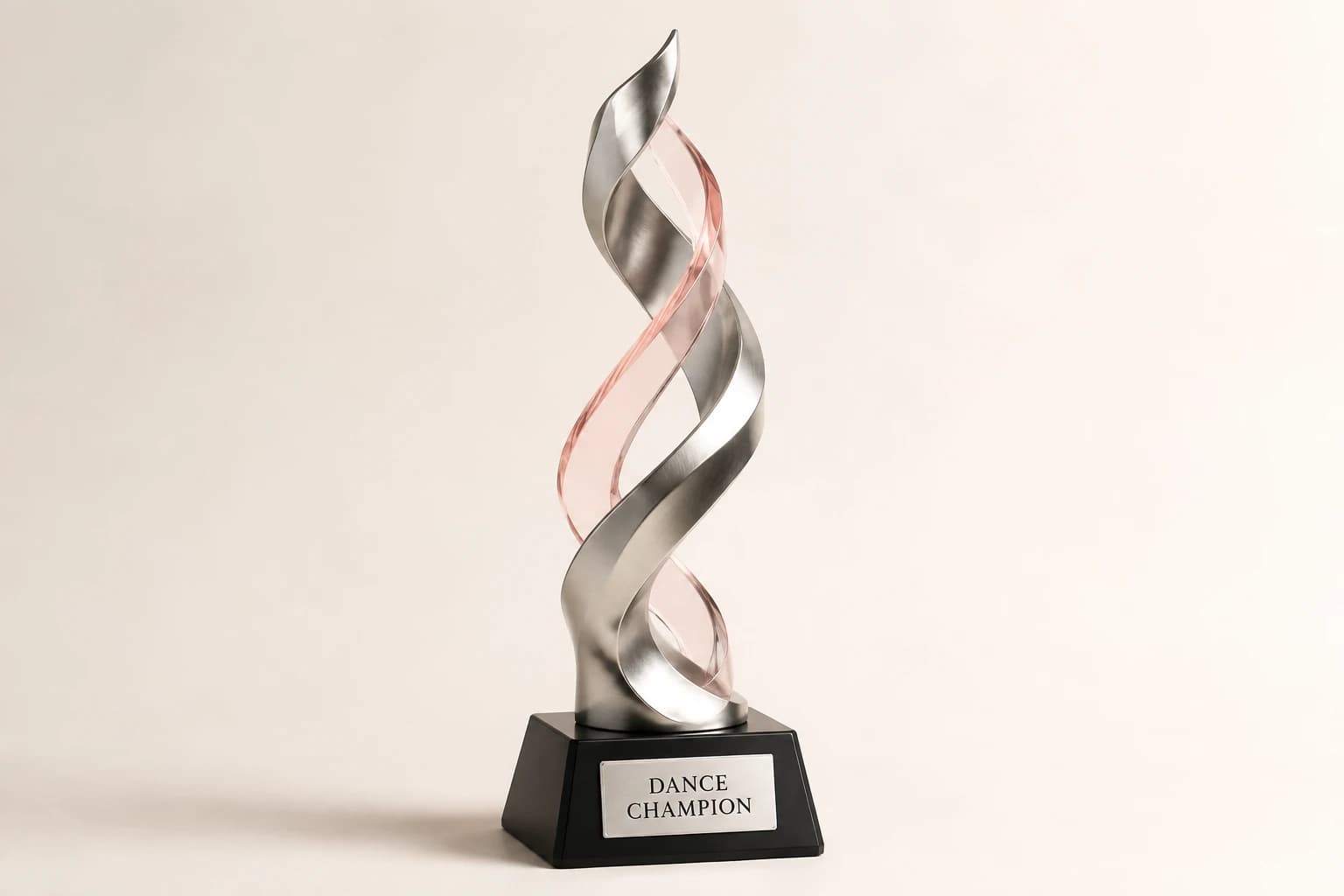
Which contribution can the studio accurately recognize?
The inscription can recognize teaching, choreography, mentorship, service or an approved achievement. Ask the program owner which contribution the piece should describe. A clear phrase about the actual occasion is more useful than an unsupported statement that the recipient is the best teacher anywhere.
If the award refers to a particular routine or production, confirm its exact title and the recipient's role. Do not credit one person with choreography, direction or founding a studio unless the responsible source owner approves that fact. The wording should express appreciation without inventing a career history to make the plaque feel more substantial.
How does studio appreciation differ from competitive honors?
A studio-selected award can celebrate its own values and contributions, but it should not imply a competition result that was never awarded. Use the organizer's approved result wording for external placements and the studio's authorized wording for internal recognition. Keep those approvals distinct.
For example, a teacher thanked for preparing a recital is not automatically a championship-winning choreographer. If both facts are relevant and verified, they can be considered separately in the inscription. If the competition claim is uncertain, the studio can still write a meaningful thank-you grounded in the actual teaching or production work it is prepared to recognize.
TrophyCentral provides separate recital, competition and studio inscription examples.

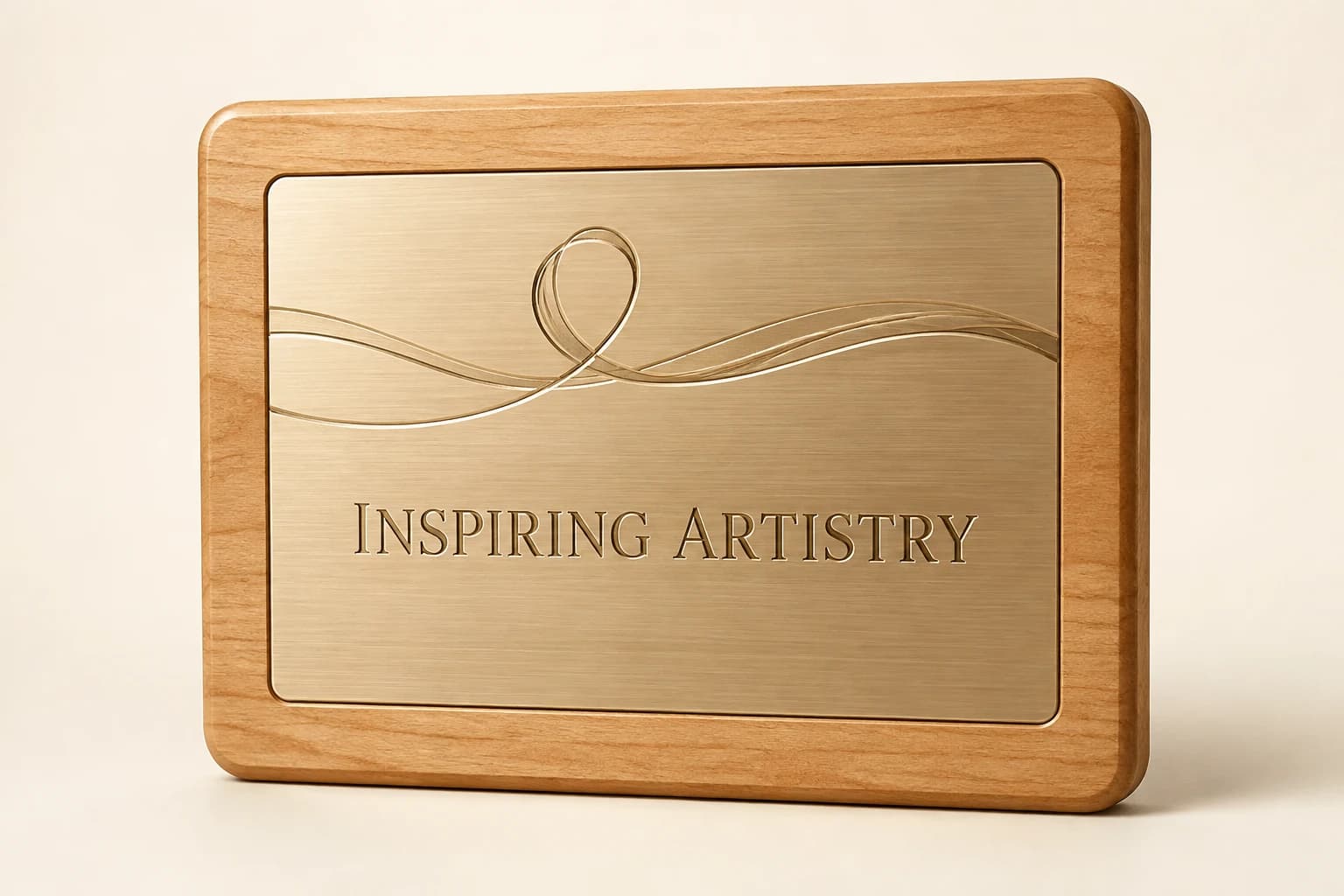
What information should the inscription emphasize?
Choose which information deserves the greatest prominence: the recipient, the award title or the studio occasion. Then place the supporting lines around it. A personal appreciation piece often benefits from a clear recipient name, a concise reason and the presenting group or season.
Avoid making every line equally prominent. A dense block can leave the reader unsure which phrase is the title and which identifies the teacher. Ask for an actual-size layout using the final strings. A short sample name in a catalog image does not establish that the real teacher's name and the full studio title will fit comfortably in the same arrangement.
Check the class-approved appreciation inscription
The sample appreciation text contains Thank You, Ms. Rivera and For Helping Us Grow on three lines. Their counts are nine, ten and nineteen, totaling thirty-eight visible characters. Load those strings to check the arithmetic, then replace them with the actual group-approved message and review its complete physical layout.
Method: Count visible characters by line against the chosen text budget; the result does not establish physical fit.
Build your plan
Counts include spaces and punctuation. Character count cannot establish physical fit: font, script, layout, material and engraving area require a proof at actual size.
Use the article’s example files
Sample rows are fictional planning examples. Replace them with authorized information and retain the approval references privately; this file is not a production release.
How can the message be warm without invented claims?
A class can express gratitude for patience, encouragement or a specific approved contribution in its own words. It does not need to claim that every dancer's life changed or that the teacher produced a measurable outcome. Ask the group to choose a statement it can honestly stand behind.
If students contribute memories, use them as input to a concise approved message rather than copying private anecdotes into a permanent public object. The longer stories can remain in an optional card or presentation. The plaque should carry a message the recipient is comfortable displaying, with no unnecessary personal information about students or families.
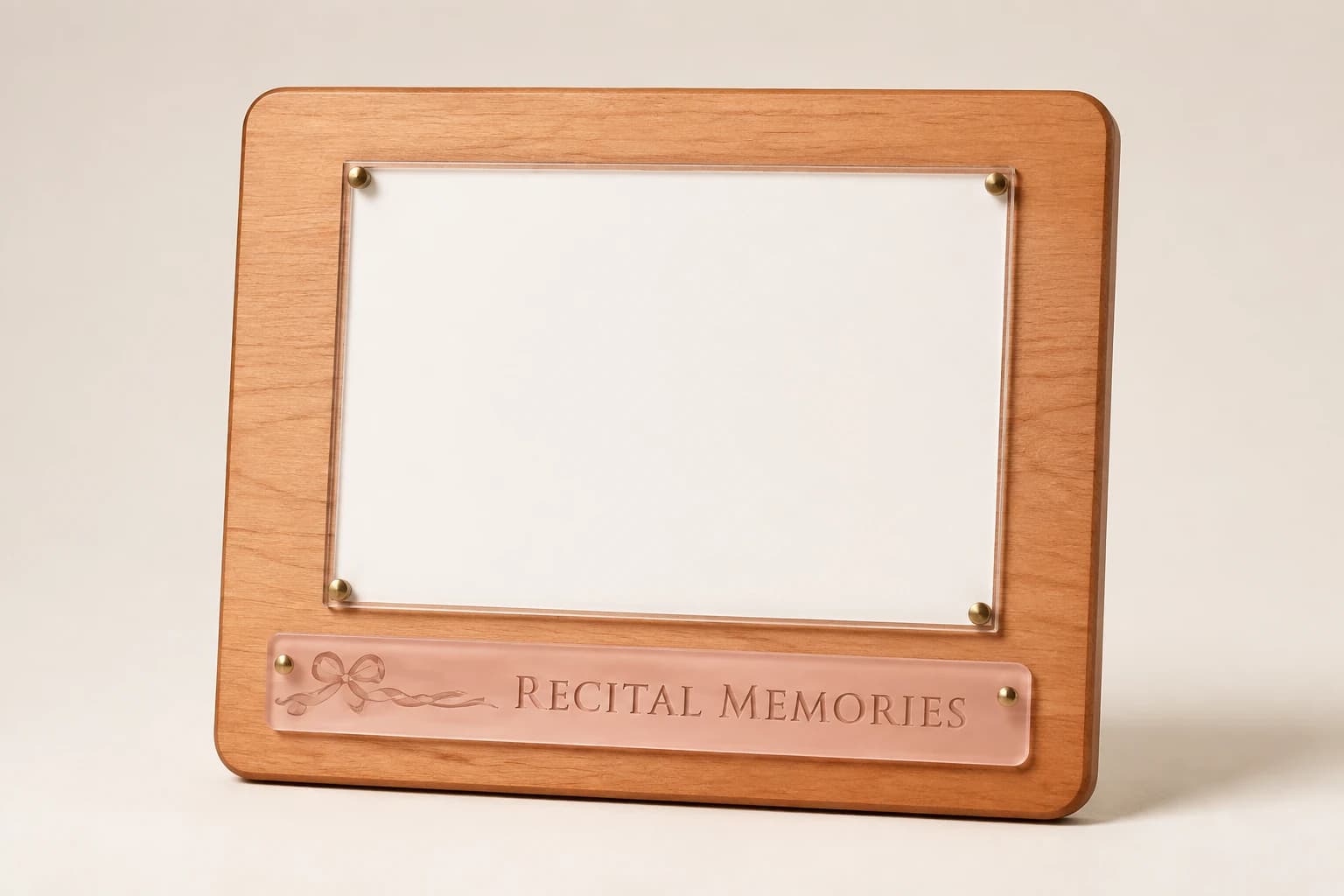
Which date belongs on a teacher or studio award?
A recital date, a studio season and a teacher's service period are different values. Select the one that explains the recognition and have its meaning approved. A later production date should not automatically replace the event or service period the piece commemorates.
For a years-of-service statement, ask the responsible studio contact to confirm the actual period and preferred wording. The supplier should not calculate tenure from a partial biography or assume the teacher worked continuously because two dates appear on a website. A simple season reference may be more appropriate when the gift recognizes the current class rather than a verified career milestone.
How should several presenting classes be named?
If two classes jointly give one teacher plaque, decide whether the inscription names both classes, the studio or a broader approved group. The physical gift can be shared without listing every student on a crowded plate. If signatures or names are requested, treat that as a separate layout scope requiring its own review.
Make sure the wording does not imply that absent classes or the entire school participated unless that is authorized. A phrase such as from your Tuesday and Thursday ensembles can identify the actual speakers if the group approves it. Keep the final message connected to the people who are genuinely presenting the gift.
Who approves translated appreciation wording?
A bilingual studio may want two language versions of its thank-you. Have a competent reviewer approve the meaning and exact display strings, then inspect the complete layout. A literal word substitution can sound awkward or change the tone even when the individual words appear familiar.
Keep names, titles and studio identity separately verified. If one language needs more space, consider a different hierarchy or additional line rather than shortening the appreciation into an inaccurate statement. The designer should reproduce the approved message, not decide which language can lose meaningful content to preserve visual symmetry.
How can the text checker identify crowded lines?
Paste the exact proposed inscription, including deliberate line breaks and punctuation. The checker counts visible characters by line against a chosen budget. It can show that a long studio name needs attention, but it cannot judge sincerity, verify a teacher's role or approve physical engraving fit.
If the result flags a line, propose a specific edit or layout change and return it for approval. Do not silently remove a recipient title or shorten the studio name into an unfamiliar abbreviation. The actual-size proof should preserve the intended meaning and identity while making the message readable on the proposed object.
How do you keep one final wording version?
Class organizers can produce many similar drafts as they collect suggestions. Choose one authorized reviewer to consolidate the final message and identify it clearly for production. A stream of small chat edits can leave the designer uncertain about which version includes the latest name, date and closing line.
When changing the inscription, supply the complete replacement text and identify the affected item. Review the resulting visual proof after the change. A correction to the recipient name can alter line length and spacing, while a new dedication may affect the entire hierarchy. Final approval should refer to the exact text and layout together.
Should a replacement preserve the original occasion?
Retain the final approved inscription and its occasion reference. If the teacher later requests a replacement, the studio can reproduce the historical message without searching old recital programs or asking former students to remember the wording. Keep that historical purpose explicit.
A teacher's current role may differ from the one recognized on the original gift. Do not silently update the title, studio name or year during a historical replacement. If the group wants a new appreciation piece for a new occasion, treat it as a new inscription decision. Keeping those purposes distinct preserves the meaning of both the earlier keepsake and any later recognition.
How does the illustrative example reconcile?
The fictional class chooses three lines: Thank You, Ms. Rivera, and For Helping Us Grow. They contain 9, 10 and 19 visible characters, totaling 38 across three lines. With a chosen twenty-character budget, all three are within the text budget.
The example expresses a class's illustrative appreciation; it does not assert a real teacher's service history or measurable student outcome. A real group would approve the recipient's exact display name and decide whether a studio or season line is needed.
If the presenting group adds a long studio name, the new composition needs another text check and actual-size proof. The earlier result applies only to these three lines. The worksheet keeps recipient approval, message approval and final layout approval separate so a warm draft cannot be mistaken for a released inscription.
Which approach matches the approved program?
Choose teacher appreciation for an approved class or studio thank-you, a studio milestone for verified organizational history, or competitive wording for an authorized event result. These purposes can share a purchase without sharing claims. The inscription should identify its actual speaker, recipient and occasion before a visual style is selected.
| Option | Useful when | Decision to resolve |
|---|---|---|
| Teacher appreciation | A class or studio thanks an approved recipient. | Identify the actual presenting group and contribution. |
| Studio milestone | The organization recognizes a verified occasion or history. | Confirm dates, roles and exact institutional wording. |
| Competitive achievement | An event has issued the relevant result. | Use the authorized competition statement rather than a studio-created claim. |
What should you know before ordering?
A teacher or studio award should express an accurate message that the presenting group can approve in full. Names, dates and claimed contributions need their own source owner. These questions address quoted work, unsupported rankings, long name lists and replacements so a warm draft becomes a clear, reviewable inscription.
What affects the cost and timing of a teacher appreciation inscription?
The selected object, amount of personalized text, artwork and proof revisions define the quoted work. Give Encore Trophy Studio the approved recipient name, presenting group and occasion before requesting a schedule. A late change to the message can alter layout and production scope, so confirm the revised proof and actual order status.
Can the plaque call a teacher the best in the state?
Use that wording only when it accurately names a verified award or approved factual recognition. Otherwise choose sincere appreciation that does not imply an unsupported ranking. A class can thank a teacher for an authorized contribution without inventing a wider competition result, career history or measurable student outcome.
Should every student name appear on the plaque?
Only when the group approves that scope and the final layout presents it clearly. A concise class or ensemble identity can be easier to read, while longer individual messages remain in a separate card. If names or signatures are included, treat them as additional personalized content requiring their own review.
Can the wording checker decide whether the message sounds right?
No. It measures visible text length against the chosen line budget. The presenting group decides meaning and tone, the authorized contact verifies names and facts, and the visual proof establishes the intended arrangement. A short message can still be inaccurate or inappropriate for the actual recipient and occasion.
Which date should a later replacement use?
Refer to the original approved occasion or service period unless the studio authorizes a change. The teacher’s current role or the replacement order date should not silently overwrite the historical gift. A new appreciation piece for another occasion needs a fresh wording decision and its own approval.
Sources and scope
The sources below support the cited technical details. The ordering workflows are editorial recommendations. Your project specification, price and schedule are established in the written quote and approved proof.
- TrophyCentral: Dance Trophies and Awards · checked 2026-09-05
Which buying guide should you read next?
All buying guidesKeep the director-approved routine title intact where possible, then compare line breaks, hierarchy and inscription area before approving any shortened display form.
Give every award one item reference and an approved show or collection destination, then keep repeat performers, shared trophies and unclaimed pieces visible in the packing schedule.