Encore Trophy Studio · buyer guide
Per-dancer keepsakes versus per-routine trophies
For an Encore Trophy Studio worldwide dance-award order, count personal keepsakes by the approved dancer rule and shared trophies by the approved routine or team rule. One dancer can appear in several routines while receiving one season keepsake. State the ownership and inscription purpose of each object before choosing quantities or designs.
Reviewed 2026-09-05 · AI-assisted editorial review. General buying guidance; illustrative scenarios are not customer case studies. Images are AI-generated concepts.
What does a personal dancer keepsake recognize?
A studio may give each dancer one annual keepsake for participating in its recital season. Another program may give a personal piece for each approved competitive achievement. Those are different rules, and the roster alone cannot choose between them. State the intended rule in a sentence that the studio's coordinator can apply consistently.
Keep the personal inscription aligned with that purpose. A season keepsake can emphasize the dancer, studio and year, while a performance-specific piece may need the routine title and approved result. Do not place a championship claim on a general recital keepsake merely because it appears in the product's sample wording.


What does a shared routine trophy represent?
A routine trophy can record a particular performance, an approved competition result or a studio-selected recognition category. Ask the responsible director to identify which meaning applies. The object should not turn an internal recital acknowledgement into an external competition placing.
Give the shared piece an owner and display destination. It may remain at the studio, go to a choreographer under the program's rules or be held by a team representative. A group photograph does not settle that ownership. Dancers should understand whether the object is a shared studio record or something one person is authorized to take home.
How should repeat performers be counted?
One dancer may perform in several routines during the same show. If the studio gives one season keepsake per dancer, count that person once in the personal batch. If the program provides routine-specific personal awards, preserve one intended item for each approved routine participation.
Do not simply sum cast sizes and call the result unique dancers. Conversely, do not remove every repeated name from a routine-based order and erase legitimate multiple pieces. Keep a dancer reference and routine reference in the working roster, then derive the physical count from the approved rule. The distinction matters before any calculator input is chosen.


Should shared and personal inscriptions match?
A shared trophy can emphasize the routine title and ensemble identity, while the personal keeper emphasizes the dancer's approved display name. The designs can share a studio mark or seasonal visual treatment without reproducing the entire cast on every small personal piece.
Review the longest actual routine title alongside the longest personal name. A design that works for a short solo title may become crowded for an ensemble piece with a long subtitle. Ask for a clear hierarchy and actual-size proofs. Do not abbreviate a choreographer's chosen title or a dancer's name merely to make both objects look symmetrical.
Count dancer keepsakes and shared routine trophies
The fictional studio approves forty-two personal dancer keepers and eight shared routine trophies. Enter forty-two main pieces and eight additional category pieces to confirm fifty objects. The tool does not count cast appearances or decide eligibility. Use the worksheet to preserve the separate personal-recipient and shared-routine rules behind those inputs.
Method: Multiply units by pieces per unit, then add separately entered categories and explicitly chosen spares. No eligibility or spare allowance is inferred.
Build your plan
Set spares yourself. This calculates the quantities you enter; it does not assume a recommended buffer.
Use the article’s example files
Sample rows are fictional planning examples. Replace them with authorized information and retain the approval references privately; this file is not a production release.
Can recital and competition awards share an order?
A studio may order pieces for its recital and for an earlier competition in the same purchase. Keep the occasions and authorized result wording distinct. A dancer who receives both can have two legitimate pieces with different historical meanings. Preserve the approved distinction.
Use the competition's approved result for a placing claim and the studio's approved program for its own recital recognition. The supplier should not choose a title by comparing social posts or guessing which trophy looks most appropriate. A combined order can simplify logistics while preserving the source authority for each statement on the objects.
TrophyCentral distinguishes recital, competition and studio award wording.
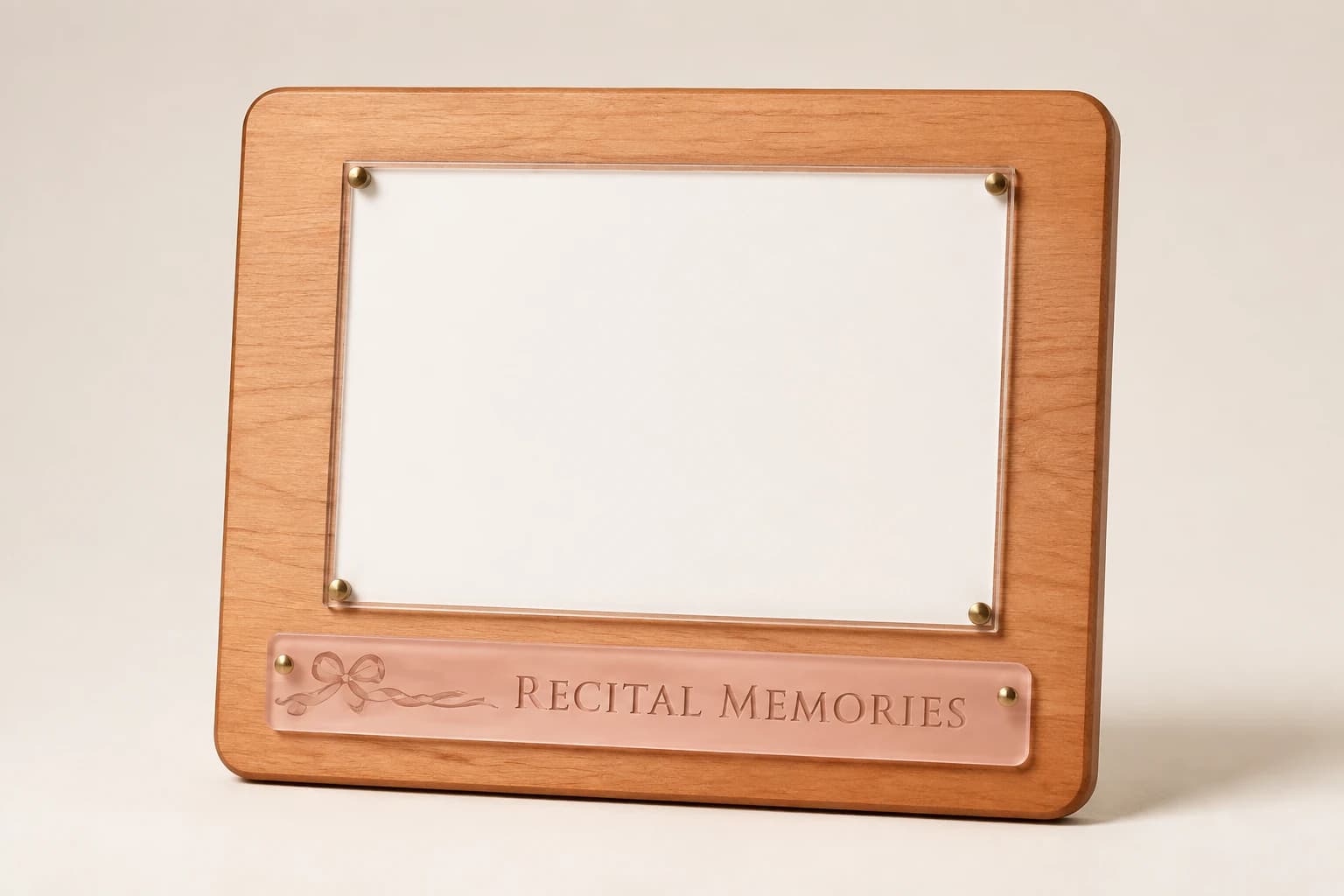
How should the group trophy photograph work?
The shared trophy can appear in a cast photograph before personal keepsakes are distributed, or the personal pieces can be handed over first if that suits the staging. Choose the sequence with the recital coordinator. A large ensemble holding several objects may need a different arrangement from a small trio.
Keep the physical plan realistic for the actual space and participants. Do not assume a photo concept establishes how the shared object can be handled or supported. Ask for the relevant instructions for the proposed construction, and assign a responsible adult or event contact to manage the object's movement and final custody.
What packaging do personal keepsakes need?
If dancers take keepsakes home, confirm the included presentation or protective packaging and how the studio will distribute it. A bulk shipment to the studio does not necessarily arrive sorted for every family's departure. Ask for the actual scope and decide whether local repacking is part of the coordinator's work.
Use discreet item references or approved names to match pieces to recipients. Keep private student information out of public labels and the inscription file. A shared routine trophy may remain at the studio while personal pieces leave with families, so their packing and final destination should be described separately.
How do shared-only and combined costs compare?
A shared-only order can preserve a studio record while providing no individual object to take home. A combined set adds that personal ownership. The studio should compare the difference openly rather than describing both proposals as equivalent award packages. Keep that difference explicit.
If the budget is limited, ask for a simpler personal format or a revised shared design with the complete scope priced. Removing the personal names or an entire recipient group changes the experience, while adjusting an optional decorative feature may preserve it. Use current written prices and specify personalization and packing before comparing totals.
What happens when a routine’s cast changes?
A dancer may leave or join a routine after the initial recital roster is prepared. The director should approve the final personal-recognition list and any shared cast wording. The supplier should not infer eligibility from a rehearsal attendance sheet or remove someone because they are absent on packing day.
If the shared trophy lists every dancer, a cast change can affect that proof as well as individual pieces. If it lists only the routine and studio, the shared artwork may remain unchanged while the personal batch changes. Record which scope is affected rather than treating every cast correction as a whole-order redesign.
What records help reproduce an award later?
Save the exact personal and shared inscriptions with their event and season references. A later replacement should reproduce the approved historical recognition, even if the dancer changes studios or the routine receives a new title. Current information should not silently overwrite the older keepsake.
For a shared studio trophy, record its intended display location and custodian. If the studio eventually moves or changes its trophy area, the history should remain understandable. An archive of approved routine titles and results can preserve the meaning without relying solely on a crowded shelf or a distant recital photograph.
How can you test the order before approval?
Before release, choose one dancer who appears in several routines and trace exactly what they receive. Then trace one shared routine trophy from its inscription through its final owner. This small walkthrough can expose a rule that sounds clear in the abstract but produces an unintended duplicate or omission.
For example, a repeat performer might correctly receive one annual keeper while contributing to two shared routine trophies that remain at the studio. The coordinator should be able to explain that outcome without changing the rule for that dancer alone. Once the rule works across the difficult cases, reconcile all personal and shared quantities against the approved schedule.
How does the illustrative example reconcile?
A fictional studio has forty-two unique approved dancer recipients and eight routines receiving one shared trophy each. Its program gives one personal keepsake per dancer, regardless of repeat performances. The order is 42 × 1 + 8 = 50 objects, with no spares.
Enter units 42, each 1, extras 8 and spares 0. The worksheet keeps the forty-two personal pieces separate from the eight shared pieces. It does not use the sum of routine cast sizes as the personal count.
If a dancer appears in three routines, they still receive one personal season keepsake under this assumed program. The three routines may each have a shared trophy if the director has approved them. Changing to one personal piece per routine participation would require a new count and revised wording; it is a different program, not a correction to this example.
Which approach matches the approved program?
Choose personal keepsakes when approved dancers should own a season record, shared trophies when the studio wants a routine history, or a combined program when both matter. These options create different ownership and counting rules. Compare the complete pieces, inscription roles and final handoffs before choosing the physical order.
| Option | Useful when | Decision to resolve |
|---|---|---|
| Per-dancer keepsake | Each approved person receives one season or occasion record. | Define deduplication and exact personal names. |
| Per-routine shared trophy | The studio records an approved performance or result. | Routine identity, shared ownership and display destination. |
| Combined program | Both personal ownership and shared performance history matter. | Separate counts, wording and final handoffs. |
What should you know before ordering?
Dance-award planning needs a clear recognition unit before pricing or proofing can be accurate. The same dancer may have one season keepsake while contributing to several shared routine trophies. These questions explain the cost scope, repeat-performer rule, shared ownership and cast changes that determine the actual personal and studio inventory.
What affects the cost of dancer keepsakes and shared trophies?
The two physical quantities, selected constructions, personalization and final packing arrangement define the scope. Ask Encore Trophy Studio to quote personal keepers and shared routine objects separately. A shared-only proposal provides a different ownership experience from a combined set, so compare the complete included pieces before comparing totals.
Does a dancer in three routines need three personal keepers?
Only if the approved program gives a personal piece for each routine participation. A one-per-dancer season program counts that person once. Keep the dancer and routine references in the working roster so the coordinator can distinguish repeated appearances from separate approved achievements that legitimately require multiple pieces.
Who takes a shared routine trophy home?
The studio or event should name the owner and receiving custodian before presentation. The trophy may remain as a studio record or have another approved destination. Appearing in a group photograph does not determine who owns the object, and a personal handoff list should keep shared trophies separate.
Can a routine trophy omit the individual cast names?
Yes, when the approved design records the routine or ensemble without a full cast list. Keep the personal-recognition roster accurate and review whether each keeper has enough event and season context to make sense on its own. The shared object’s wording should follow its actual ownership and historical purpose.
What changes when a dancer joins the routine late?
Have the director approve the revised recognition list and identify the affected objects. A shared trophy listing the cast may need a new proof, while one listing only the routine may remain unchanged. Personal quantity depends on the approved program and production status, not merely the roster edit.
Sources and scope
The sources below support the cited technical details. The ordering workflows are editorial recommendations. Your project specification, price and schedule are established in the written quote and approved proof.
- TrophyCentral: Dance Trophies and Awards · checked 2026-09-05
Which buying guide should you read next?
All buying guidesBuild the recital count from unique approved recipients or approved performance entitlements, then keep show appearances and later handoffs in separate fields.
Give every award one item reference and an approved show or collection destination, then keep repeat performers, shared trophies and unclaimed pieces visible in the packing schedule.